
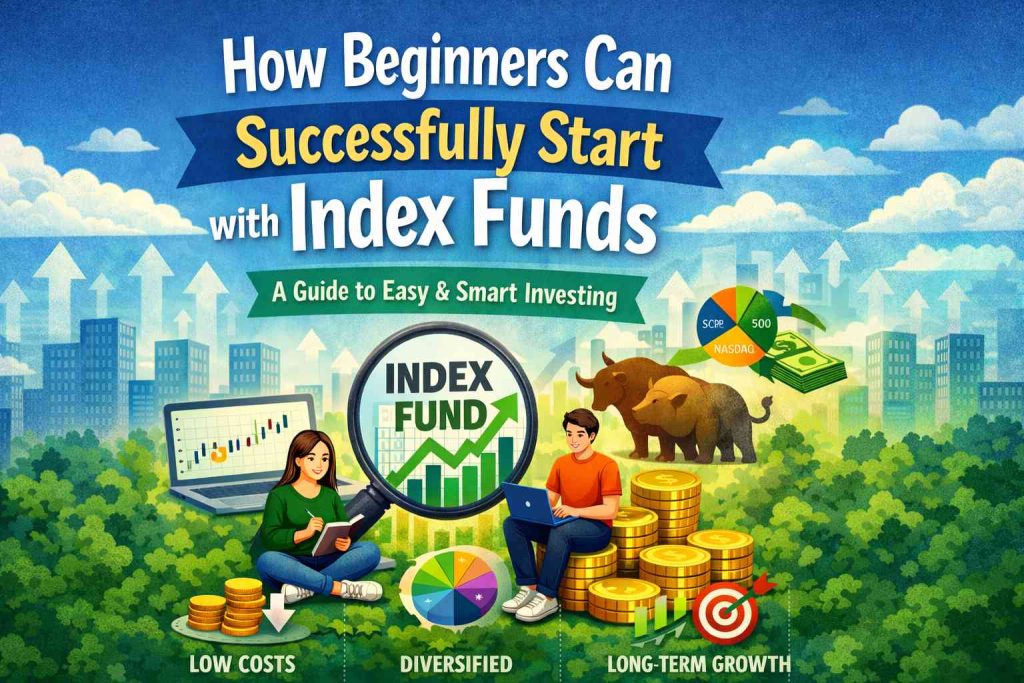
Investing in the inventory market can be an intimidating enterprise for beginners. However, index finances offer a less complicated, cost-effective way to go into the funding global. These funds are designed to replicate the performance of a specific market index, presenting broad market exposure whilst minimizing the risks related to character stock investments. Navigating the investment landscape can be challenging, and resources like immediate-edge.co can help connect traders with educational experts who provide valuable insights into index fund investing. Leveraging such platforms can enhance your understanding and support your investment journey.
Understanding Index Funds
An index fund is a type of mutual fund or exchange-traded fund (ETF) created to mirror the performance of a specific market index, such as the S&P 500 or the Nasdaq Composite. Instead of selecting individual stocks, the fund invests in all—or a representative sample—of the companies included in that index. This means when you invest in an index fund, you are essentially purchasing a small share of every company within that benchmark. As a result, your investment is automatically diversified across multiple businesses and sectors, which helps reduce the overall risk compared to buying a single stock.
One of the key advantages of index funds is their passive management approach. Unlike actively managed funds, where professional managers frequently buy and sell stocks in an attempt to outperform the market, index funds simply track the index they are designed to follow. The portfolio adjusts automatically whenever the index changes, such as when companies are added or removed. Because this strategy does not require constant research, analysis, or frequent trading, operating costs are generally lower. Lower fees can make a significant difference over time, especially for beginners and long-term investors who want steady growth with minimal expenses.
Steps to Start Investing in Index Funds
Set clear financial goals.
Before investing, it is vital to outline your financial desires. Are you saving for retirement, a home, or a toddler’s education? Understanding your time horizon and economic goals will assist you in picking out the right index, finances, and investment method. For example, if you plan to invest for the long term (e.g., retirement), you would possibly opt for fairness index finances that have better boom capacity.
Establish a budget.
Determine how much cash you could allocate to investing. This budget must be separate from your emergency fund and important prices. Start with an amount you’re comfortable with, even though it’s a small sum. Many brokerage companies can help you begin investing with minimal capital, making the index price range reachable to most investors.
Choose a Brokerage Account
To spend money on an index price range, you’ll want a brokerage account. Research and evaluate exceptional brokerage platforms to locate one that meets your wishes. Look for a broker that gives a person-friendly interface, low expenses, and admission to a wide variety of index funds. Some popular brokerage platforms encompass Vanguard, Fidelity, Charles Schwab, and ETRADE.
Many agents now additionally provide fee-free buying and selling for ETFs, making it easier for beginners to spend money on index funds without incurring excessive expenses.
Select the Right Index Funds
Once you’ve installed your brokerage account, it’s time to select the proper index budget. Consider the subsequent factors whilst deciding on funds:
Expense Ratio:
This is the once-a-year price charged by means of the fund, expressed as a percent of your funding. Lower expense ratios are commonly better, as high prices can consume your returns over time.
Performance History:
While beyond performance isn’t an assurance of destiny results, it may provide a perception of how the fund has reacted to market conditions.
Tracking Error:
This measures how carefully the fund follows its benchmark index. A decreased tracking error shows that the fund carefully replicates the performance of the index.
Implement dollar-cost averaging.
One effective strategy for novices is greenback-cost averaging (DCA). This entails investing a set amount of cash into index funds at ordinary intervals, irrespective of market situations. By continually investing, you can lessen the effect of marketplace volatility and avoid looking to time the market, which may be mainly hard for amateur investors.
Monitor and Rebalance Your Portfolio
After investing in an index price range, it’s essential to reveal your portfolio periodically. However, avoid the temptation to make common modifications primarily based on brief-time period marketplace fluctuations. Instead, pay consciousness to your long-term desires and ensure that your portfolio stays aligned with your investment strategy.
Stay informed and educate yourself.
Continually educating yourself approximately about investing is crucial to becoming a hit investor. Read books, observe monetary news, and do not forget to become a member of funding forums or communities to advantage of insights from other traders. Understanding the wider market context, such as financial signs and developments, will assist you in making knowledgeable funding decisions.
Be patient and stay committed.
Investing in an index budget is a long-term approach. While markets may be risky, keeping a disciplined technique and staying devoted to your funding plan is essential. Avoid making impulsive choices based totally on brief-time period market moves.
Conclusion
Investing in index funds can be an excellent starting point for beginners who want to build long-term wealth in the stock market. By understanding how index funds work, setting clear financial goals, and following a disciplined investment strategy, new investors can approach the market with greater confidence and clarity. Index funds are known for their low costs, built-in diversification, and simple structure, making them a practical and beginner-friendly option for starting an investment journey.
As you begin investing, remember that successful investing is rarely about quick results. The key lies in staying consistent, remaining patient during market ups and downs, and continuing to learn along the way. With a clear plan and long-term mindset, index funds can serve as a strong foundation for financial growth and future stability.